
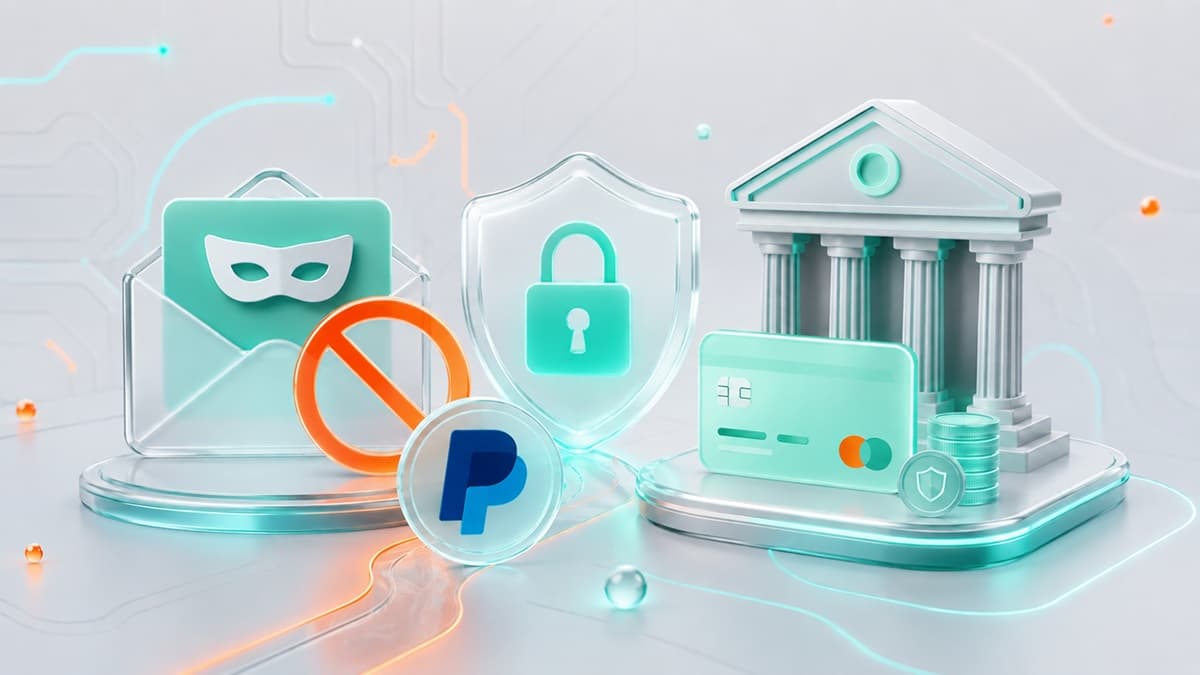
Should You Use Temp Mail for PayPal or Banking? Here's Why Not
If you are considering using a temp mail for paypal, online banking, or digital wallets, the short answer is simple: Do not do it.
While disposable inboxes are an exceptional tool for curbing marketing spam and protecting your privacy on ordinary websites, applying them to financial accounts is a fast way to lose access to your funds permanently. Financial platforms rely on permanent, accessible communication channels to comply with strict regulations, verify your identity, and deliver account recovery codes. Registering a PayPal wallet or bank account with a temporary email address almost guarantees an immediate fraud lock, frozen funds, or a permanent account lockout.
Why Financial Platforms Block Disposable Emails
Financial institutions do not treat email addresses as simple communication channels. In the financial sector, your email address serves as a primary digital anchor for your legal identity and security infrastructure.
Quick Summary:
- PayPal and banks require valid, permanent emails by law (KYC/AML rules).
- Automated risk engines flag and block disposable email domains instantly.
- Expired temporary inboxes make account recovery and 2FA impossible.
- Solution: Use dedicated aliases for financial tools, reserve temp mail for low-risk signups.
Regulatory Compliance (KYC and AML)
Banks, credit card issuers, and payment processors like PayPal operate under strict Know Your Customer (KYC) and Anti-Money Laundering (AML) legal frameworks. These regulations require institutions to maintain verifiable, long-term contact details for every account holder.
If a financial provider cannot reach you with legally mandated disclosures, tax forms, or transaction notices, they are legally obligated to restrict or terminate your account. A temporary email address directly violates the core principles of KYC because it anonymizes the user and prevents continuous communication, signaling high-risk behavior to compliance officers.
Automated Fraud Engine Detection
Modern payment gateways utilize automated risk engines to evaluate every incoming registration in real time. When you submit a signup form, the platform’s backend checks the email domain against risk databases.
These systems analyze the domain's age, MX records, and reputation to block suspicious registrations immediately. To understand the technical mechanics of how these platforms identify throwaway domains, read our guide on how websites detect temporary email addresses.
Terms of Service Mandates
PayPal’s User Agreement explicitly states that users must maintain an accurate, valid email address capable of receiving messages from the platform. When you add an email address to PayPal, the service sends a confirmation message containing a unique verification link.
If you cannot receive and click that link, the email remains unverified, preventing you from receiving funds, sending payments, or completing account setup. Furthermore, using an intentionally temporary domain is often classified as a policy violation, giving the platform legal grounds to freeze your balance indefinitely.
The Recovery Trap: What Happens When the Inbox Expires
The most severe risk of using a burner email address for financial services is not just getting blocked at signup—it is the inevitable lockout that occurs later.
Temporary email addresses are ephemeral by design. Whether an inbox lasts ten minutes or three days, it will eventually expire along with all messages sent to it. Financial platforms rely heavily on asynchronous email communication for security actions you cannot predict.
Forced Password Resets
If you forget your password, or if a payment system detects an unusual login attempt (such as signing in from a new mobile device, a public hotel network, or a different country), the platform automatically freezes access. To unlock it, you must enter a security code sent to your registered address. If that inbox no longer exists, you cannot retrieve the code, and your account remains permanently inaccessible.
Mandatory Two-Factor Authentication (2FA)
Many financial institutions fall back on email-based one-time passwords (OTPs) when primary authentication methods fail, when you clear your browser cookies, or when processing high-value transfers. If you use a temporary email, you lose the ability to complete these challenges. Losing access to your email means losing access to your money.
Identity Verification Stalls
When an account with an expired email address gets locked, customer support will require you to prove ownership. They may ask you to confirm details sent to your registered inbox, such as transaction reference numbers, monthly statements, or security links. Because temporary inboxes do not offer long-term storage or administrative access, you will be unable to satisfy these verification checks, leaving your funds trapped in the platform's reserves.
Unreachable Legal and Dispute Notices
If a buyer files a dispute against your PayPal transaction, or if your bank flags a fraudulent charge, the institution sends time-sensitive notification emails. Missing these messages because your inbox evaporated hours earlier means losing dispute rights by default. PayPal operates on strict response windows; if you do not reply to a chargeback or dispute within the designated timeframe, the funds are automatically deducted from your account and returned to the counterparty.
What Temporary Email Can and Cannot Do
Understanding where temporary email excels—and where it fails—is essential for building an effective privacy strategy.
WHAT TEMP MAIL DOES WELL:
+ Shields your real inbox from promotional clutter and spam.
+ Prevents cross-site tracking across casual web platforms.
+ Provides instant access without requiring registration.
+ Disposes of incoming messages automatically after use.

WHERE TEMP MAIL FALLS SHORT:
- Cannot receive critical long-term account alerts or password resets.
- Cannot satisfy KYC, AML, or identity verification requirements.
- Cannot bypass financial fraud detection systems.
- Cannot be recovered once the inbox lifespan ends.
Temporary email was created to solve a specific problem: keeping unwanted commercial noise out of your primary inbox while protecting your identity on unverified websites. For a deeper breakdown of these boundaries, see our article on disposable email vs burner email vs temp mail.
Decision Framework: Choosing the Right Email Strategy
To protect both your wallet and your inbox privacy, apply the right email type to the right category of service.
Option 1: Ephemeral Temporary Mail
- Best For: Downloading whitepapers, accessing one-time coupon codes, signing up for casual web forums, testing non-sensitive web applications, and viewing gated content.
- Retention: Ephemeral (minutes to days).
- Financial Safety: Unsafe. Never use for digital wallets, bank portals, crypto exchanges, or primary merchant accounts.
- Primary Benefit: Complete isolation of your real identity with zero signup overhead.
Option 2: Email Forwarding Aliases
- Best For: Online shopping guest checkouts, newsletters, SaaS subscriptions, and non-critical merchant profiles.
- Retention: Permanent, but can be deactivated at any time.
- Financial Safety: Moderate. Safe for online retailers, but not recommended as the primary login for core banking.
- Primary Benefit: Hides your real email address while allowing security alerts and receipts to reach your primary inbox.
Option 3: Primary Core Email Address
- Best For: PayPal, primary bank accounts, mortgage portals, credit card management, and government services.
- Retention: Permanent.
- Financial Safety: Maximum. Meets all legal compliance and security requirements.
- Primary Benefit: Uninterrupted access to password resets, dispute notices, and critical security alerts.
Safe Privacy Strategies for Financial Signups
You do not need to sacrifice all personal privacy to manage your finances safely online. You can isolate your sensitive accounts without exposing your primary identity to every online storefront.
1. Maintain a Dedicated Financial Address
Create a clean, secondary permanent email address dedicated exclusively to financial institutions, utility providers, and official billing. Do not use this address for social media, retail checkouts, or casual web browsing. Because this address is never shared publicly, it remains virtually immune to marketing spam and phishing lists. You can read more about isolating your digital presence in our guide to avoiding spam email.
2. Use Custom Email Aliases for E-Commerce
When shopping at new or unfamiliar online stores, use an email alias service (such as iCloud Private Relay, SimpleLogin, or DuckDuckGo Email Protection) that forwards messages to your main account. If the merchant suffers a data breach or starts sending aggressive marketing blasts, you can turn off that specific alias without affecting your primary address or financial accounts.
3. Use Temp Mail for Everything Else
Save temporary inboxes for low-stakes online interactions where you have no long-term financial interest. When you want to try a new web app, read an article behind a forced registration wall, or download a free template, a temporary inbox protects your privacy effortlessly.
For these daily, non-financial tasks, Best-TempMail provides instant, free disposable inboxes with no registration required. It lets you collect verification codes instantly without letting third-party marketing databases track your personal inbox.
Frequently Asked Questions
Can PayPal ban my account if I use a temporary email address?
Yes. PayPal utilizes automated security risk engines that screen incoming email domains against blacklists of known disposable mail providers. If an account is flagged for using a throwaway address, PayPal may temporarily limit account functions, freeze funds, or mandate immediate identity verification documents to restore access.
What should I do if I already created a PayPal account using a temporary email?
Log into your PayPal account immediately, navigate to Account Settings > Email, and add a valid, permanent email address that you control. Once PayPal sends a confirmation link to your new address, click it to verify the address, set it as your Primary email, and safely remove the temporary address from your profile.
How do banks and payment processors detect temporary email services?
Financial backends analyze the domain portion of your email address during form submission. They cross-reference the domain against real-time databases of Disposable Email Address (DEA) operators, check the age and MX record configurations of the domain, and evaluate risk scores calculated by automated fraud-prevention tools. For a detailed breakdown of these security layers, review our analysis on why disposable email domains get blocked.
When is it safe to use a disposable email service like Best-TempMail?
Using a disposable email from Best-TempMail is entirely safe for low-stakes, non-financial activities where you do not need long-term account access. This includes signing up for online software trials, accessing gated content, testing developer workflows using specialized email tools, or joining public forums without revealing your personal contact details.
Your temp mail is ready right now
No signup, no password. A disposable inbox waiting the moment you open the page.
Get My Free Temp Mail →